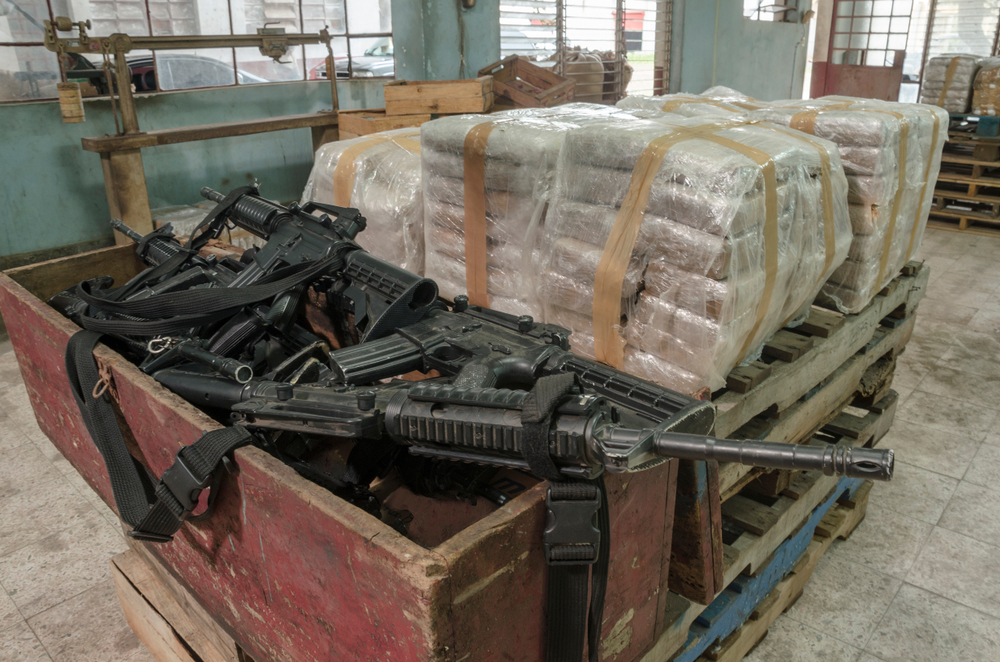
The Florida Keys have a long history of drug smuggling that dates back to the 1970s.
Locals still call floating bales of cocaine "square grouper" — a throwback to when fishermen made more money hauling drugs than fish.
And one 65-year-old Florida charter captain just got caught selling cocaine to undercover cops.
Bradford Picariello Allegedly Found a Cocaine Jackpot at Sea
Bradford Todd Picariello owns Outlaw Fishing Charters in Marathon, Florida.
The name should've been the first red flag.
Police say Picariello found approximately 23 kilograms of cocaine floating in the ocean — probably dumped by traffickers running from authorities — and decided to go into business for himself.
On January 19, undercover detectives from the Monroe County Sheriff's Office set up a sting operation at Picariello's marina.
The boat captain allegedly told the undercover agent to bring a cooler to the meeting to make it look like he was picking up fish.
Classic Keys move — disguise the drug deal as a normal fishing pickup.
Picariello handed over one kilogram of cocaine to the "buyer" for $10,000 cash.
Then he allegedly told the agent he had another 100 pounds of cocaine available if he wanted to buy more.
That's when police swarmed his boat and slapped the cuffs on.
https://twitter.com/KATVNews/status/2013838719573246258?s=20
A History of "Square Grouper"
Finding cocaine in the ocean is common in the Florida Keys.
Drug traffickers have been using the Keys as a smuggling route since rumrunners during Prohibition.
In the 1970s and 1980s, fishermen and charter boat captains discovered that running "square grouper" — slang for bales of marijuana — paid better than hauling seafood.
When cocaine exploded in popularity during the 1980s, the term expanded to include kilos of coke floating in the water.
When cops get close, smugglers chuck their cargo overboard and pray another trafficker picks it up.
But ocean currents and storms send these packages washing up on beaches or floating in fishing lanes instead.
Hurricane Debby blew over $1 million worth of cocaine onto Florida Keys beaches in August 2024.
Just this past year, boaters have found 65 pounds of cocaine marked with bald eagle designs, 25 kilos stamped with Nike logos, and packages wrapped with everything from Chanel knock-offs to Yosemite Sam cartoons.
The packages are branded by cartels to identify which organization owns the shipment.
Picariello's 23 kilos were wrapped in plastic and stamped with "332" — a cartel marking system.
https://twitter.com/JayeB62620916/status/2014176088008650859?s=20
What Made Picariello Think He'd Get Away With It
Here's what separates the 1970s from today: back then, locals could make serious money off square grouper and law enforcement couldn't keep up.
Stories abound of sheriff's deputies turning a blind eye or taking a cut to let shipments pass.
The laid-back Keys earned a reputation as a pirate's paradise where locals knew the shallow waters better than any outsider.
By the late 1980s, federal agencies like the DEA launched massive crackdowns with increased Coast Guard patrols and sophisticated radar technology.
Undercover operations and heavy prison sentences dismantled the networks that once thrived in the Keys.
Picariello apparently missed that memo.
The Monroe County Sheriff's Office worked with the DEA, U.S. Customs and Border Protection, U.S. Border Patrol, and CBP Air and Marine Operations to nail him.
When police searched a storage unit Picariello directed them to, they found the rest of his stash — 22 more kilos of cocaine.
Authorities seized approximately 23 kilograms total, a .40-caliber handgun, roughly $8,000 in cash, and his 38-foot vessel.
https://twitter.com/WorldCrimeIntel/status/2014449648430125308?s=20
Federal Prosecutors Are Going After Him Hard
Picariello faces charges of trafficking cocaine, selling cocaine, and possessing cocaine.
The case is being prosecuted federally, which means he's looking at decades in federal prison if convicted.
Federal trafficking charges carry mandatory minimum sentences — there's no negotiating your way out when you're caught selling kilos to undercover agents.
Sheriff Rick Ramsay thanked the multi-agency team that investigated the case.
The Florida Keys may still have a reputation for laid-back island living, but the days of charter captains making easy money off square grouper are over.
Picariello's business was called Outlaw Fishing Charters for a reason — apparently he thought he could live up to the name.
Instead, he's sitting in the Monroe County jail waiting for federal prosecutors to make an example out of him.
Sources:
- Julia Bonavita, "Boat captain accused of selling cocaine found at sea to undercover cops in sun-soaked tourist haven: police," Fox News, January 22, 2026.
- Bob D'Angelo, "Charter boat captain accused of selling cocaine he found at sea," Cox Media Group National Content Desk, January 21, 2026.
- "Florida charter boat captain accused of selling cocaine found at sea," USA Today, January 22, 2026.
- Lauren Keenan, "Drug traffickers' lost cargo keeps surfacing on Florida shores," Straight Arrow News, August 30, 2024.
- "Drug Running History in the Florida Keys: Discover the Untold Stories," Kelsey Caputo Realtor, accessed January 23, 2026.