The U.S. Coast Guard just pulled a convicted cocaine trafficker off a life raft 50 miles off Vero Beach.
The cash in his bag was labeled with the name of a Bahamian politician connected to a Colombian cartel shipping a thousand kilograms of cocaine into America.
Now he's in federal custody – and what prosecutors found on him tells you everything about how this drug pipeline actually works.
The Man They Saved Already Did 18 Years for Cocaine
Jonathan Eric Gardiner, 58, is not a first-time offender.
Federal records show he was convicted in 2006 and sentenced to 220 months – over 18 years – for federal narcotics and money laundering offenses.
He was deported back to the Bahamas in 2014.
He didn't stop.
By 2023, according to DEA court documents, Gardiner – known by the alias "Player" – was already supplying cocaine to a Georgia-based drug trafficking organization, shipping multi-kilogram loads from the Bahamas to Miami.
https://twitter.com/ExxAlerts/status/2056537207557742885?s=20
In June 2024, he was indicted alongside 13 others in connection with that Georgia drug network.
He was still running when his plane went down on May 12.
Three Phones and $30,000 in Cash Labeled for a Politician
The Beechcraft King Air 300 turboprop departed Marsh Harbour in the Bahamas heading for Freeport when the engine failed.
The pilot ditched the aircraft into the Atlantic roughly 50 miles off Vero Beach.
All 11 passengers survived and climbed onto a yellow life raft.
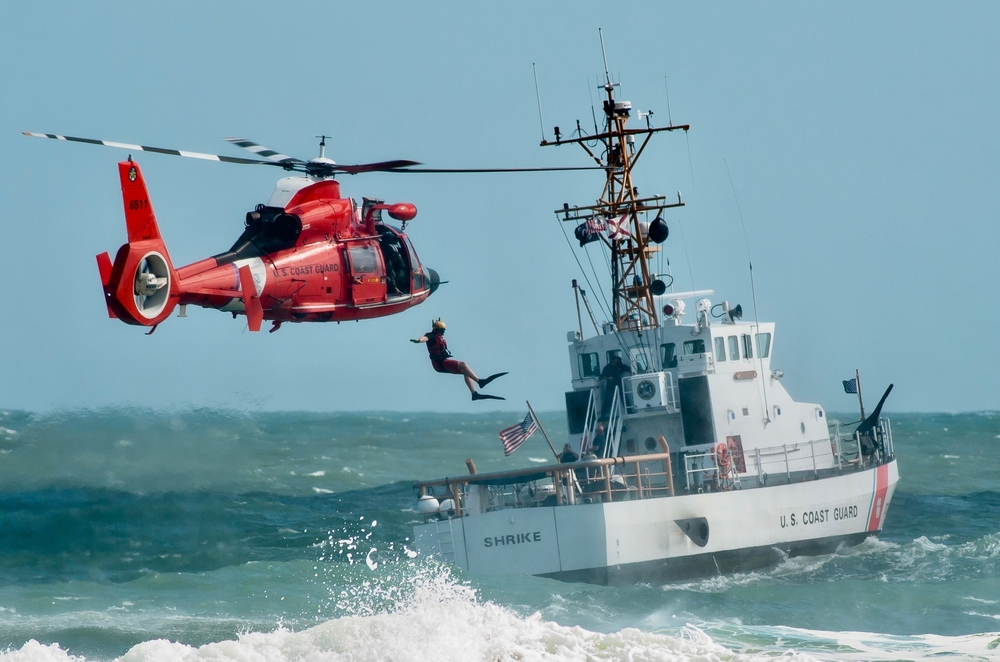
They sat in the open ocean for five hours – some injured, a thunderstorm moving in – before the 920th Rescue Wing scrambled an HC-130J and an HH-60W helicopter to pull them out.
When authorities processed Gardiner after the rescue, they found three cell phones and a cross-body bag carrying approximately $30,000 in Bahamian currency.
The money had a name written on it.
https://twitter.com/WorldCrimeIntel/status/2056446742694965623?s=20
That name, according to the federal complaint, belongs to a Bahamian politician allegedly tied to a planned cocaine shipment from Colombia – 900 to 1,000 kilograms – scheduled to move through the Bahamas in November 2024.
Federal investigators had video of that same politician meeting with a charged Colombian drug trafficker in 2024, working out how to move a large cocaine shipment from South America through the islands.
This Is What the Bahamas Pipeline Looks Like
What happened off Vero Beach last week isn't random.
The Bahamas has been a cocaine highway between Colombia and Florida since the 1980s, when Medellín Cartel co-founder Carlos Lehder literally built a private airstrip on Norman's Cay island, bribed the Bahamian government, and used it to flood South Florida with cocaine.
Nothing has fundamentally changed.
A November 2024 federal indictment charged two senior Royal Bahamas Police Force officers and a Bahamian military official with running a trafficking network – feeding cartel shipments through Bahamian airports, tipping off smugglers to U.S. Coast Guard movements, and feeding the DEA false seizure data to cover their tracks.
Gardiner's own complaint describes the same architecture: government protection at the top, cocaine and cash moving through established air and sea routes, criminal proceeds laundered through construction contracts with Bahamian government agencies.
This isn't a smuggler working alone.
This is an infrastructure.
Trump already understood the problem.
Operation Pacific Viper – launched in August 2025 under DHS Secretary Kristi Noem – has seized over 511,000 pounds of cocaine, more than three times the Coast Guard's annual average, and the pace is accelerating.
https://twitter.com/AmericanCrime01/status/2055775212269097092?s=20
Coast Guard crews have been destroying smuggling boats at sea with helicopter gunners and precision sniper fire.
The system is working – but the Bahamas pipeline keeps refilling.
He's sitting in federal court in Orlando right now.
The American military saved his life.
The American justice system now has him.
That's the part Biden's border policy never accounted for: the drugs weren't just coming across the southern border.
They were landing in the Atlantic, right off the coast of Florida, with the protection of foreign governments that America treated as allies.
Sources:
- "Plane crash survivor linked to international drug trafficking operation, DEA says," FOX 35 Orlando, May 19, 2026.
- "Passenger on Bahamian plane that crashed off Florida coast charged in drug conspiracy," NBC Miami, May 16, 2026.
- "Operation Pacific Viper: U.S. Coast Guard Announces Largest Drug Offload in its History," Department of Homeland Security, August 26, 2025.
- United States v. Jonathan Eric Gardiner, Federal Criminal Complaint, U.S. District Court, Southern District of New York, May 2026.