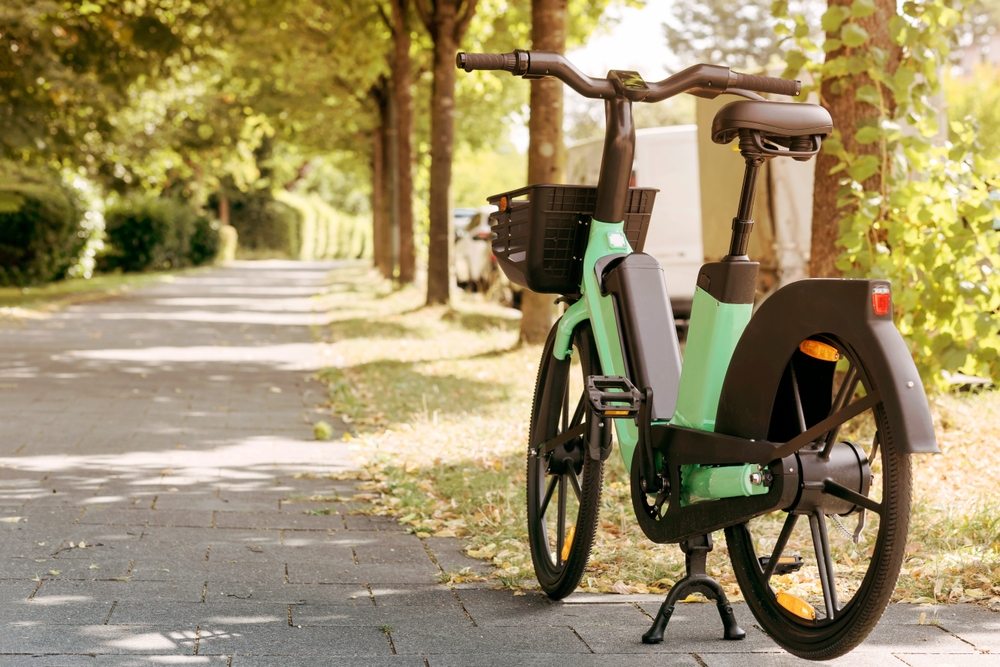
The Florida Legislature passed a government surveillance expansion bill unanimously this spring.
They called it an e-bike safety bill.
DeSantis saw through it – and he was the only one in Tallahassee who did.
The Bill That Wasn't What It Claimed to Be
SB 382 looked reasonable on paper.
E-bike crashes are real.
Kids have died on Florida roads and trails, and lawmakers showed up to the House floor in tears about it.
The bill set a 10-mile-per-hour speed limit for e-bike riders within 50 feet of a pedestrian, required audible signals before passing, and created a statewide micromobility task force with no sunset date to recommend what the bill itself called "limitless regulations."
Here's what nobody talked about during the committee hearings: enforcement.
To enforce a 10-mile-per-hour speed limit on a bicycle path, you need speed detection equipment.
Speed detection equipment generates data.
https://twitter.com/WallStreetApes/status/2071323765112467758?s=20
That data gets stored somewhere – and once it exists, it never disappears.
DeSantis caught it.
His veto letter said it plainly: the violation "would inevitably be enforced with speed detection and surveillance devices" and "this bill will likely lead to enhanced surveillance by local governments against citizens."
At his Friday press conference, he was even more direct: "What it will lead to is more surveillance of people by law enforcement. And we don't need that."
How Good Intentions Build the Surveillance State
This is exactly how every surveillance expansion in American history gets started.
Nobody passes a bill that says "we are building a surveillance network to monitor citizens."
They pass a bill about traffic safety, or public health, or protecting children.
Then the infrastructure goes in.
Then it gets used for purposes nobody voted for.
This is not a theory.
In December 2025, a Georgia motorcyclist got a traffic ticket with this printed on it: "CAPTURED ON FLOCK CAMERA 31 MM 1 HOLDING PHONE IN LEFT HAND."
Flock Safety cameras were sold to Georgia communities as automated license plate readers to fight crime and track stolen vehicles.
https://twitter.com/ReOpenChris/status/2070656813897331110?s=20
They ended up photographing every vehicle that passed them, building location histories on law-abiding citizens, and – in that Georgia case – pivoting to general traffic enforcement the moment the opportunity presented itself.
In Louisville, Kentucky, 150 unauthorized immigration searches ran through the city's Flock camera system using a local detective's stolen login credentials – and Kentucky law didn't require a warrant to access any of it.
Arkansas, Idaho, and Montana – solid conservative states – spent 2025 passing laws trying to claw back control of the data that local surveillance networks had already collected.
That is what DeSantis just prevented in Florida.
The Task Force Problem
DeSantis also noticed something the unanimous vote missed: the bill was logically incoherent.
It created new statewide regulations before the task force it created had issued a single recommendation.
If the whole point is to study the problem and figure out the right approach, why are you locking in the rules before the study starts?
DeSantis asked it out loud: "You're already substantively legislating. Why are you doing a commission? If you're going to do a commission, then the commission can come and do that thing."
That is not a minor procedural complaint.
A task force with no sunset date, charged with recommending "limitless regulations," is a bureaucratic engine designed to expand government control indefinitely – while the speed detection infrastructure required to enforce the preliminary rules hums along collecting data in the background.
Bureaucracies do not recommend their own dissolution.
What DeSantis Actually Stopped
Florida's conservative base knows something that 149 unanimous legislators apparently forgot: the surveillance state does not downsize itself.
Once the cameras go up, they stay up.
DeSantis refused to let "protecting children" become the entry point for a local government monitoring network that would outlast the safety concern that created it by decades.
That is what executive courage looks like – and it is exactly the kind of move that most Republican governors are too afraid to make when a bill passes 149 to zero and grieving parents are on the House floor.
It is not the same as not caring about kids on e-bikes.
It is recognizing that the government's instinct to solve every problem by deploying monitoring equipment and collecting more data – even when the cause is sympathetic – is the same instinct that has turned American roads into rolling surveillance networks that feed your location history to agencies and data brokers with no warrant required.
DeSantis drew the line before the cameras went up.
The 149 legislators who passed this bill should think hard about why he was the only one who had to.
Sources:
- Jay Waagmeester, "E-bike speed limits are an 'overreach,' DeSantis says with veto," Florida Phoenix, June 26, 2026.
- "DeSantis vetoes Florida e-bike safety bill, citing surveillance concerns," CBS12 / WPEC, June 26, 2026.
- "Here's why Gov. DeSantis vetoed these 5 new Florida bills," Click Orlando / News 6, June 28, 2026.
- "Traffic Violation! License Plate Reader Mission Creep Is Already Here," Electronic Frontier Foundation, April 7, 2026.
- "License plate readers are a privacy concern lacking oversight," Bluegrass Institute, April 22, 2026.
- "Worried about surveillance, states enact privacy laws and restrict license plate readers," Stateline, January 8, 2026.