Spain founded the oldest city in America right here in Florida – 42 years before Jamestown, 55 years before Plymouth Rock.
Most Americans have no idea.
Now UF students just pulled something out of the ground that makes that history impossible to ignore.
The Find That Stopped a Career Archaeologist Cold
Gifford Waters has spent his career digging up history.
He has worked shipwrecks, mission sites, colonial ruins – thousands of artifacts across decades of fieldwork.
He had never seen anything like this.
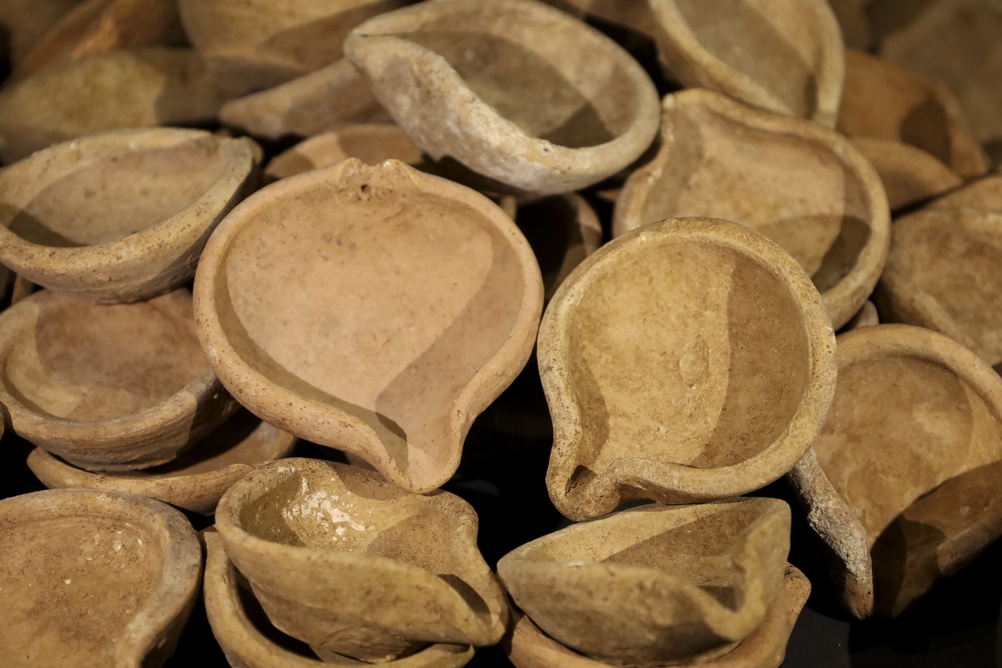
University of Florida students enrolled in an archaeology field course unearthed a fully intact clay pot this spring at the Mission San Francisco de Potano site in northwest Gainesville – a vessel crafted by a member of the Potano-Timucua tribe roughly 400 years ago.
Not a shard. Not a fragment.
The entire thing, unbroken, after four centuries underground.
"It's very unique," Waters said. "Typically, we find things that were broken and discarded."
He went further than that.
https://twitter.com/bluecorncomics/status/2081832119903371494?s=20
Besides shipwreck sites – where intact objects are common because water preserves them – Waters said this was the first time in his career that a crew he worked alongside unearthed a completely intact pottery vessel on land.
Think about that.
Thousands of sites.
"You don't leave things behind that you can still use," he added. "So why was this purposefully put into a pit?"
Nobody knows.
What Was Happening When Someone Made This Pot
The Mission San Francisco de Potano site tells a story most American textbooks skip entirely.
Spain established St. Augustine in 1565 – the oldest continuously occupied European settlement in the continental United States, predating Jamestown by 42 years and Plymouth by 55.
From that base, Spain built more than 100 Catholic missions across what is now Florida and Georgia, sending lone Franciscan friars deep into Native American territory to convert tribal chiefs and establish colonial control.
The Potano people – a subgroup of the broader Timucua culture – had already been pushed from their original homeland between present-day Payne's Prairie and Orange Lake when Spanish forces displaced them in 1585.
By 1606, Spain sent a single friar to live among a few hundred Potano people and establish the mission.
One European. Hundreds of indigenous residents. A mission in the wilderness.
"It was a very difficult life," historian Michael Gannon told the Gainesville Sun.
The pot UF students found was likely made during that period – and its style is one the archaeologists don't recognize.
It doesn't match local Potano pottery traditions.
Researchers think it may have traveled to the site through long-distance trade with communities near St. Augustine or present-day Jacksonville, or been brought by other displaced groups who later settled in Potano territory.
How It All Ended
The mission survived a Timucua rebellion in 1656 – the Spanish crushed it and reestablished their presence.
Then the English came.
English raiders from the Carolina colonies, armed and allied with Creek fighters, swept through Spanish Florida in the early 1700s.
They were not just raiding for territory.
They were capturing Native Americans to sell into slavery for British Caribbean plantations.
The Spanish refused to arm the indigenous people living at their missions, which left them with no way to defend themselves when the raids came.
Thousands were captured and sold.
Thousands more fled north.
https://twitter.com/bluecorncomics/status/2081832119903371494?s=20
Mission San Francisco de Potano was destroyed by English raiders in 1706 – the same year that pot was placed in a pit and sealed underground.
By the mid-1700s, virtually the entire indigenous population of Florida had been wiped out – by disease, by English raids, by colonial warfare that most Americans have never heard of.
What They Never Taught You in School
More than 7,000 artifacts have been recovered from the Potano mission site since excavations began in 2006.
Think about that number.
Seven thousand pieces of a story your history textbook skipped in four sentences.
Your teachers spent a week on the Pilgrims.
They spent maybe a paragraph on Florida.
But right here, in a patch of woods on the north side of Gainesville, you can walk among the excavation plots of a 17th-century kitchen, a friar's residence, and a Native American village that was thriving while the Mayflower was still decades away.
This is the founding story the coastal elites decided you didn't need to know – because it's Spanish, it's Catholic, it's messy, and it doesn't fit the tidy New England narrative they prefer.
And now a group of college students just pulled a 400-year-old pot out of the ground – perfectly intact, mystery unsolved – and even Smithsonian Magazine had to admit it's extraordinary.
Someone made that pot by hand.
Someone placed it in a pit.
The English raiders came.
The mission burned.
The Potano people were scattered or sold into slavery.
And that pot sat in the Florida dirt for 320 years, waiting.
You now know more about the real founding of America than most people who went to college in this country.
That's the story.
That's why it matters.
Sources:
- Sarah Kuta, "Students in Florida Discovered a 400-Year-Old Intact Pot That Reveals Conflict Among Indigenous, Spanish and English Powers," Smithsonian Magazine, July 24, 2026.
- "UF Archaeology Students Unearth Rare, Centuries-Old, Unbroken Pot at Florida Spanish Mission Site," News4Jax, July 21, 2026.
- "Students Unearth Rare, Centuries-Old Pot at Florida Spanish Mission Site," Phys.org, July 21, 2026.
- "Setting the Stage: The Early Spanish Period in Florida 1565–1763," Florida Humanities, June 2024.
- "European Exploration and Colonization," Florida Department of State, Division of Historical Resources.