Brittany Clark stopped to cool off on a hike in Little Big Econ State Forest.
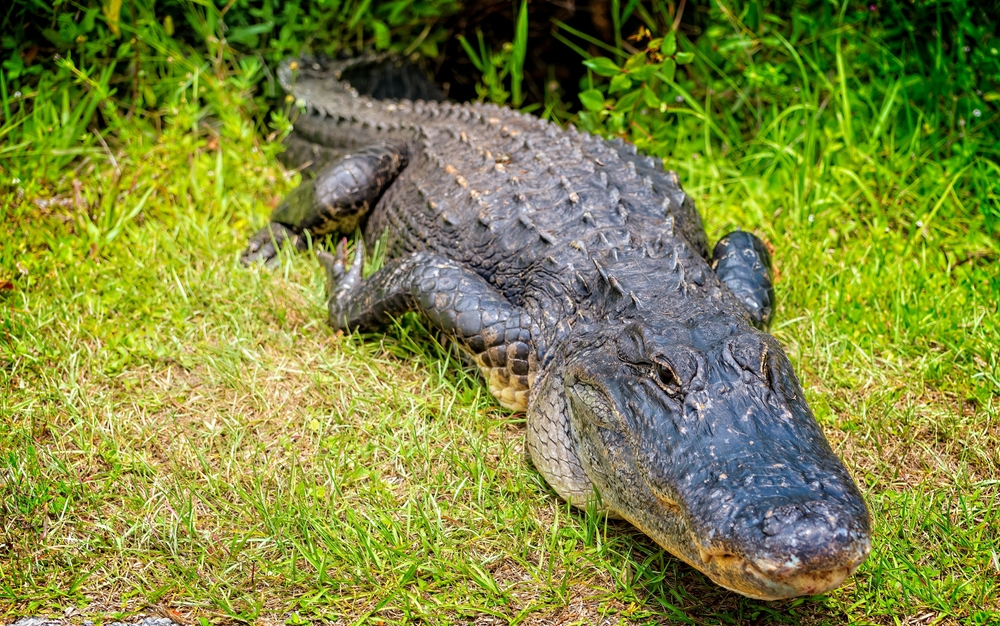
She was kneeling in three feet of water when a 13-foot alligator grabbed her arm and began a death roll.
Her boyfriend was still trying to pull her arms from the alligator's mouth when he called 911 – and the place where she died is safer than the pond behind your neighborhood.
A Death That Started With a Day Hike
Brittany Clark, 31, of Orlando was hiking with her boyfriend Chance Allison and a friend on June 28 when the group waded into the Econlockhatchee River near the Barr Street Trailhead in Little Big Econ State Forest.
The alligator seized her arm and executed what the Orange County Medical Examiner's Office called a death roll – a violent spinning maneuver designed to tear prey apart.
Allison was dragged underwater trying to fight the animal off.
The alligator briefly released Clark, then grabbed her other arm.
https://twitter.com/BPINewsOrg/status/2073036801841762708?s=20
Her friends pulled her to shore and called 911.
She was transported to a hospital as a trauma alert and died from her injuries.
The Florida Fish and Wildlife Conservation Commission dispatched trappers who captured two massive alligators near the scene – one measuring 12.5 feet, one measuring 13 feet.
DNA tests confirmed the 13-foot animal was the one that killed her.
Florida Has 1.3 Million Alligators and Is Adding 831 People Per Day
Here is the collision that Florida refuses to talk about honestly.
The FWC has tracked nearly 500 unprovoked alligator attacks since 1948.
The last decade alone – 2016 through 2025 – produced 116 attacks and 10 fatalities, nearly one-third of all recorded fatal attacks in Florida's history.
That is not a coincidence.
Florida's human population has grown by more than 303,000 residents per year – the equivalent of adding a city the size of Orlando every twelve months.
The state has approximately 1.3 million alligators distributed across all 67 counties.
Every retention pond behind a subdivision.
Every canal alongside a highway.
Every river running through a state park.
https://twitter.com/unlimited_ls/status/2072829302186344826?s=20
All of them are alligator habitats.
The FWC data tells the story clearly: 2023 produced 23 attacks, the highest single-year total in more than a decade, including two fatalities.
The summer of 2026 turned worse, with at least four confirmed attacks between June 21 and July 3 alone – prompting the agency to issue active public safety warnings.
The Danger Is Not in the Swamp – It Is in the Neighborhood Pond
The attacks that don't make national headlines are the ones that should terrify you most.
Deborah Herndon, 73, was found deceased at a residential pond in Palm Harbor on October 28, 2025.
Gloria Serge, 85, was killed in 2023 while walking her dog at the water's edge in a St. Lucie County community.
Erin Glover was four years old when an alligator took her from the water's edge of Hidden Lake in Charlotte County in 1988.
The FWC's own fatality records show the pattern: golf courses, neighborhood ponds, canals, retention basins, and landscaped shorelines where people feel safe.
The alligator does not distinguish between a state park river and the pond behind your HOA.
What it sees is water and movement.
Every swim in an unmarked freshwater area carries the same risk Brittany Clark faced.
Every child playing at the water's edge.
A University of Florida wildlife researcher put it plainly: "We've not only moved into places where alligators used to live. We've kind of invited them back by creating habitat for them."
Think about what that means.
https://twitter.com/srkntnyldz/status/2072946368222474663?s=20
Every drainage pond dug to satisfy a county building code is a new alligator home.
Every decorative lake at a subdivision entrance in Osceola County – the second-fastest growing county in the state – is a 13-foot animal waiting to be discovered by someone's grandchild.
In the first seven months of 2026, Broward County logged 221 calls requesting alligator removals.
Not attacks. Removal calls. Alligators showing up where people live.
The FWC's Nuisance Alligator Hotline exists because the state understands what most residents refuse to accept: the alligator was there before the subdivision, and it is not leaving.
Sources:
- Florida Fish and Wildlife Conservation Commission, "Alligator Bites on People in Florida," FWC.com, February 2026.
- Jake Jordan, "DNA Links 13-Foot Alligator to Fatal Econlockhatchee River Attack," WFTV, July 16, 2026.
- Staff Report, "FWC: 13-Foot Alligator Attacked, Killed Florida Woman, DNA Test Confirms," FOX 35 Orlando, July 17, 2026.
- Staff Report, "Alligator Attacks in Florida Are Spiking: Safety Rules Every Visitor Needs," TravelersToday, July 25, 2026.
- Staff Report, "Florida Alligator Attack Statistics: What FWC Data Reveals After Seminole County Swimmer's Death," ClickOrlando, June 30, 2026.