The Coast Guard suspended the search for a grandmother who fell off a cruise ship on New Year's Day.
She vanished 40 miles off the coast of Cuba during what should have been a relaxing vacation.
And the Coast Guard gave up searching for one 77-year-old Florida woman after this cruise ship disaster.
Coast Guard calls off search after eight-hour operation in Cuban waters
Holland America's Nieuw Statendam was supposed to be heading to Key West when everything went sideways.
The 77-year-old woman went overboard about 40 miles northeast of Sabana, Cuba on January 1st.
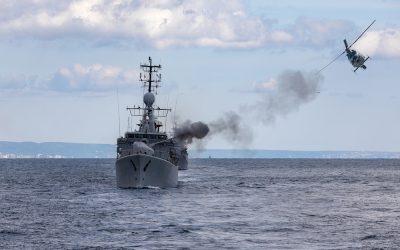
Multiple Coast Guard crews — including the Cutter William Trump and an MH-60 helicopter from Air Station Clearwater — scoured 690 square miles of ocean for eight hours.¹
They came up empty.
The ship departed Fort Lauderdale on December 27th for what was marketed as a seven-night "New Year-themed cruise" through the Eastern Caribbean.
Nobody plans to spend their retirement years disappearing into the Atlantic Ocean while their family watches helplessly from a cruise ship deck.
https://twitter.com/azfamily/status/2007769752488337546?s=20
But that's exactly what happened to this grandmother while the rest of America was nursing hangovers.
Holland America canceled the ship's scheduled stop in Key West on January 2nd so they could keep looking for the missing passenger.²
The cruise line's statement hit all the expected notes about being "deeply saddened" and their "family assistance team" supporting the victim's relatives.
That's cold comfort when you're staring at 690 square miles of empty ocean knowing your loved one is somewhere out there.
Cruise industry's dirty secret about overboard survival rates
The math on cruise ship overboards is absolutely brutal.
Between 2009 and 2019, 212 passengers and crew members went overboard from cruise ships worldwide.
Only 48 survived.³
That's a survival rate of roughly 28% — and those are the lucky ones who got rescued quickly.
For context, you've got better odds of surviving a car accident in the UK than you do of surviving a fall from a cruise ship.
The industry tries to spin these incidents as "exceedingly rare" — and statistically speaking, they're right.
Your odds of going overboard are about 1 in 1.8 million based on the 34.6 million people who cruised in 2024.⁴
But tell that to the families of the 19 people who fell overboard in 2024 alone.⁵
The cruise lines have spent millions installing fancy detection systems with thermal cameras and motion sensors.
Some ships now have overboard alarms that supposedly alert the crew within seconds.
Royal Caribbean and Carnival keep bragging about their V-MOB sensors.
None of that technology helped this 77-year-old woman.
The ship's crew followed all their procedures.
They threw flares.
They circled back.
They searched for eight hours.
She's still gone.
Statistics prove cruise industry isn't telling whole truth about overboard deaths
This isn't just some freak accident that nobody could have prevented.
The cruise industry reported 22 overboard incidents in 2024 — up from 18 in 2023 and 14 in 2022.⁶
That's a 57% increase in just two years.
The Cruise Lines International Association keeps claiming their safety measures work and incidents are declining.
The data says otherwise.
Water temperature plays a massive role in survival rates.
Fall into the warm Caribbean and you might last a few hours if you're a strong swimmer.
Hit the water off Alaska and you've got maybe 30 minutes before hypothermia shuts down your body.
This woman went overboard in January in waters north of Cuba.
Even in the tropics, overnight water temperatures can drop into the mid-70s.
That's cold enough to kill you if you're treading water for hours waiting for a rescue that never comes.
The cruise lines have gotten really good at managing the public relations nightmare when someone goes overboard.
They isolate the family.
They offer counseling services.
They quietly disembark the relatives at the next port.
The rest of the passengers get a discount on their next cruise booking and everyone pretends nothing happened.
Meanwhile, another family is planning a funeral for someone whose body they'll probably never find.
Holland America had 150 years to figure out how to keep passengers from falling off their ships.
They build 975-foot vessels that can carry nearly 2,700 guests.
They install railings that supposedly meet Coast Guard standards.
They hire thousands of crew members trained in emergency procedures.
And somehow, a 77-year-old grandmother still ended up in the ocean on New Year's Day 40 miles from Cuba while her family watched the ship sail away.
The cruise industry pulled in $25 billion in revenue in 2024.⁷
They can afford to build better railings.
They can afford to install more safety barriers.
They can afford to station more crew members on deck during nighttime hours when most overboard incidents happen.
But that would cut into their profit margins.
So instead, they keep building bigger ships, packing in more passengers, and hoping the next overboard incident happens on somebody else's cruise line.
¹ Malcolm Shields, "Coast Guard suspends search for woman overboard from Florida cruise ship near Cuba," WPBF 25 News, January 2, 2026.
² Richard Tribou, "Coast Guard calls off search for woman overboard Holland America ship out of Florida," Orlando Sentinel, January 2, 2026.
³ "Are Cruise Ships Safe?," U.S. News & World Report, November 18, 2025.
⁴ Ibid.
⁵ "The 19 Man Overboard Incidents in 2024," Cruise Radio, April 28, 2025.
⁶ "Cruise Ship Outbreaks are On the Rise," Cruise Hive, January 1, 2026.
⁷ "27 Cruise Statistics for 2025," Emergency Assistance Plus, November 3, 2025.