Florida just got hold of the internal documents that prove it.
Attorney General James Uthmeier took action on Monday.
And now TikTok's lawyers are standing in front of a judge trying to explain why the company killed its own safety fix.
The Law TikTok Has Been Defying Since January 2025
Florida's House Bill 3 went into effect January 1, 2025.
It banned children under 14 from creating social media accounts entirely.
It required parental consent for 14 and 15-year-olds.
TikTok ignored it.
https://twitter.com/BreannaMorello/status/2066526009436852691?s=20
Eighteen months later, Florida Attorney General James Uthmeier filed suit Monday, accusing TikTok of continuing to let children under 14 open accounts – and letting teenagers bypass parental consent requirements – in open defiance of state law.
"TikTok has built one of the world's most popular social media platforms on the back of deception," the complaint states.
It's not the first time.
Indiana sued TikTok for child safety violations in 2022.
Iowa sued in 2024 after the company misrepresented how often sexual content reaches users as young as 12.
Fourteen state attorneys general coordinated a massive multi-state action that October.
TikTok denied, delayed, and kept doing exactly what it was accused of – every single time.
The Safety Fix TikTok Killed to Protect Profits
This is where the story gets damning.
During the 2024 multi-state investigation, internal TikTok communications became public after faulty document redactions allowed reporters to copy and paste blacked-out sections into a plain text file.
https://twitter.com/FBSaunders/status/2066597390413332620?s=20
TikTok's own research found that heavy use of the app degrades children's analytical thinking, memory, empathy, and emotional depth – while worsening anxiety.
TikTok's Head of Child Safety Policy acknowledged in internal communications that the algorithm prioritizes children's engagement over their sleep, schoolwork, and relationships.
Executives proposed a "non-personalized feed" that would have reduced compulsive behavior in young users.
Leadership killed it to protect revenue.
TikTok then engineered a screen time tool its own staff called ineffective internally – and marketed it to parents as a child safety feature.
Florida's lawsuit confirms the same fraud: the company's Restricted Mode and Family Pairing features don't prevent children from reaching sexual content, drug content, and other mature material the app promises parents is filtered out.
Addiction Is the Product
Attorney General Uthmeier didn't mince words Monday: "TikTok's success hinges on its ability to addict children and teenagers to the platform."
TikTok's own researchers measured the exact threshold for habit formation in young users – 260 videos.
At eight seconds per video, that's under 35 minutes before a child is likely addicted.
https://twitter.com/AGJamesUthmeier/status/2066522187243418015?s=20
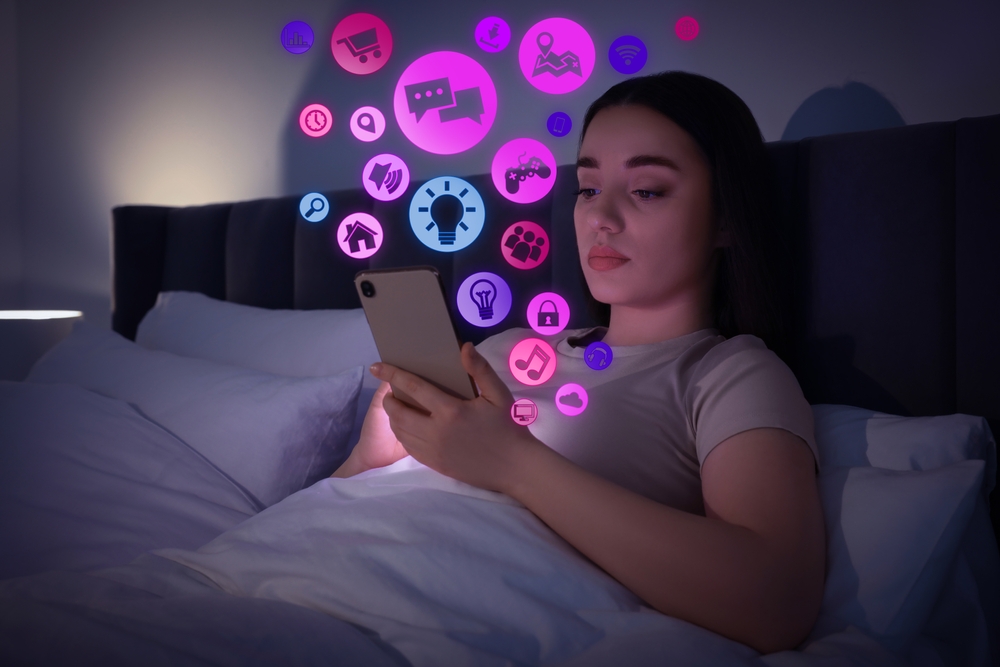
The algorithm then feeds them an endless scroll of auto-played content calibrated to their exact psychological vulnerabilities.
Push notifications are timed for maximum disruption.
The recommendation engine is designed to hold users past the point they intended to stop.
Florida's lawsuit names infinite scrolling, autoplay, livestreaming, push notifications, and personalized recommendations as intentional addiction features – not accidents or design oversights.
The complaint also accuses TikTok of lying to parents through app store ratings that classify sexual content, drug references, nudity, and profanity as "infrequent" or "mild" – when Florida investigators found those categories are routinely pushed to users registered as young as 13.
Senate Judiciary Chairman Chuck Grassley has called TikTok's CEO to testify before his committee next week.
European regulators have separately found TikTok's addictive design in a preliminary breach of the Digital Services Act.
China Gets Educational Content. Your Grandkids Get the Addiction Machine.
Here's what TikTok doesn't want you to know.
ByteDance – the Chinese company that owns TikTok – runs a completely different experience for children inside China.
Chinese children under 14 using Douyin, the domestic version of the app, are capped at 40 minutes per day and served educational content – science experiments, museum exhibitions, history lessons.
https://twitter.com/MAHA_Action/status/2066567763049542135?s=20
American children get infinite scroll, autoplay, and push notifications timed to maximum psychological impact.
ByteDance built one product to develop Chinese children and a different product to addict yours.
They measured the addiction threshold internally. They rejected the fix that would have reduced it.
Next, they handed American parents a broken safety tool and called it protection.
Florida's HB 3 – championed by Governor Ron DeSantis – is one of the most aggressive child protection laws in the country.
TikTok defied it for eighteen months anyway.
Attorney General Uthmeier has declared zero tolerance.
Every state attorney general in America should be watching what happens next in Florida – because the template DeSantis built is the blueprint for making ByteDance answer for what it has done to an entire generation of American kids.
Sources:
- Jim Mishler, "Florida Sues TikTok for 'Egregious' Conduct," Newsmax, June 15, 2026.
- "Zero tolerance: Uthmeier sues TikTok, accuses app of targeting children, violating social media law," WFLA, June 15, 2026.
- "Florida AG sues TikTok, alleging violations of state child safety law," Fox 35 Orlando, June 15, 2026.
- "States probed TikTok for years. Here are the documents the app tried to keep secret," OPB/NPR, October 2024.
- "Massachusetts AG Unveils Internal TikTok Documents in Lawsuit Alleging Child Addiction Strategies," National Law Review, February 2025.
- "What is Florida's HB 3 Act? Requirements and Compliance Overview," PRIVO, December 2025.
- "Chinese version of TikTok limits kids under 14 to 40 minutes per day," South China Morning Post, September 2021.