Genevieve Gallagher went boating with her husband and 8-year-old daughter.
She had a small cut on her leg.
By Wednesday she was unconscious in a hospital – and when she woke up, most of her left leg was gone.
What Is Happening in Florida Right Now
Florida has confirmed 14 cases of Vibrio vulnificus – the bacteria the news calls "flesh-eating" – in 2026.
Two people are dead.
A child between 10 and 14 years old was infected in Brevard County.
Marion County has had two cases – one of them fatal.
The Florida Department of Health tracks cases across 10 counties: Bay, Brevard, Hillsborough, Lee, Marion, Miami-Dade, Okaloosa, Palm Beach, Polk, and St. Johns.
That is not a fringe coastal problem.
That is the entire state.
What This Bacteria Actually Does
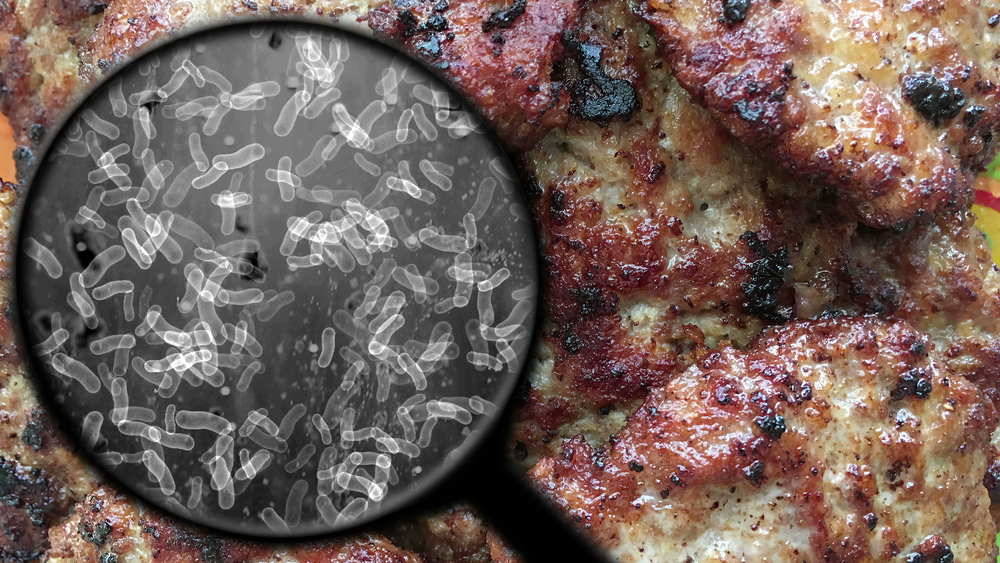
Vibrio vulnificus is not science fiction.
It lives naturally in warm saltwater and brackish water – the kind Florida families swim in every summer.
https://twitter.com/AllEmeraldCoast/status/1964129345619779824?s=20
When it enters an open wound, it can trigger necrotizing fasciitis: a condition where the tissue around the wound dies rapidly and spreads faster than surgeons can cut.
One in five infected people die – and sometimes within 24 to 48 hours of first feeling sick.
The Florida Department of Health reports that since 2017, there have been 438 cases and 93 deaths statewide.
The years with the highest death tolls were 2022 and 2024 – both years Florida was hammered by major hurricanes that pushed warm brackish water inland.
Hurricane Ian in 2022 drove 74 cases and 17 deaths.
Hurricane Helene in 2024 drove 82 cases and 19 deaths.
The pattern is consistent: more storm flooding means more bacteria exposure, more infections, more deaths.
You Don't Have to Be Sick to Be at Risk
Gallagher wants Florida families to understand something the news often buries.
She is healthy.
No autoimmune disease.
No compromised immune system.
A small cut from a boat – the kind you get and forget about – was enough.
She gave a warning that every family heading to the beach this summer needs to hear.
In her own words: "If you have a cut on your leg, a mosquito bite that you scratched and it's open, if you shaved your legs before you are going to the beach the next day, you are leaving those little microscopic openings for this bacteria to make its way in."
Dr. Autumn Barnes, a family medicine physician with Health First in Florida, explained the two exposure routes: an open wound in warm saltwater or brackish water, and eating raw or undercooked shellfish – particularly oysters.
The bacteria are most concentrated between May and October when Florida water temperatures peak.
That means right now is the highest-risk window of the year.
The Warning Families Are Not Hearing
Gallagher did not know the name Vibrio vulnificus before she lost her leg.
Most Florida families do not.
They go to the beach, they splash in the water, they come home – and a small cut they forgot about becomes an emergency room visit three days later.
The Florida Department of Health's prevention guidance is simple.
Do not go in warm saltwater or brackish water with any open cut, scratch, or broken skin – even small ones.
Cook all shellfish thoroughly.
Do not eat raw oysters.
If a wound exposed to coastal water starts showing redness, swelling, or skin discoloration, get to an emergency room immediately.
Do not wait.
Delays in antibiotic treatment are the difference between recovering and losing a limb – or losing your life.
This Bacteria Is Now Spreading Up the East Coast and Florida Is Just the Start
Scientists tracking the pathogen say its range is already expanding northward as coastal water temperatures rise.
Cases have been confirmed in 2026 across Alabama and Connecticut as well.
Gallagher chose to go public because she believes one warning could save a life.
"It's very serious," she said. "You can lose your life."
She is right.
The bacteria that took most of her leg is already in Florida waters right now.
The families who know that and check for cuts before they wade in will be safer than the ones who don't.
Sources:
- Florida Department of Health, Vibrio vulnificus Case Data, 2026.
- Meghan Moriarty, "Florida woman describes flesh-eating bacteria as cases rise," WESH 2 / Brevard County reporting, August 12, 2026.
- Fox 35 Orlando, "Vibrio vulnificus cases in Florida: County-by-County," August 12, 2026.
- Fox Weather, "Flesh-eating bacteria tracker 2026: Cases in Florida, Alabama and Connecticut," August 2026.
- Fox News, "Flesh-eating bacteria cases in Florida rise after back-to-back hurricanes," 2024.